
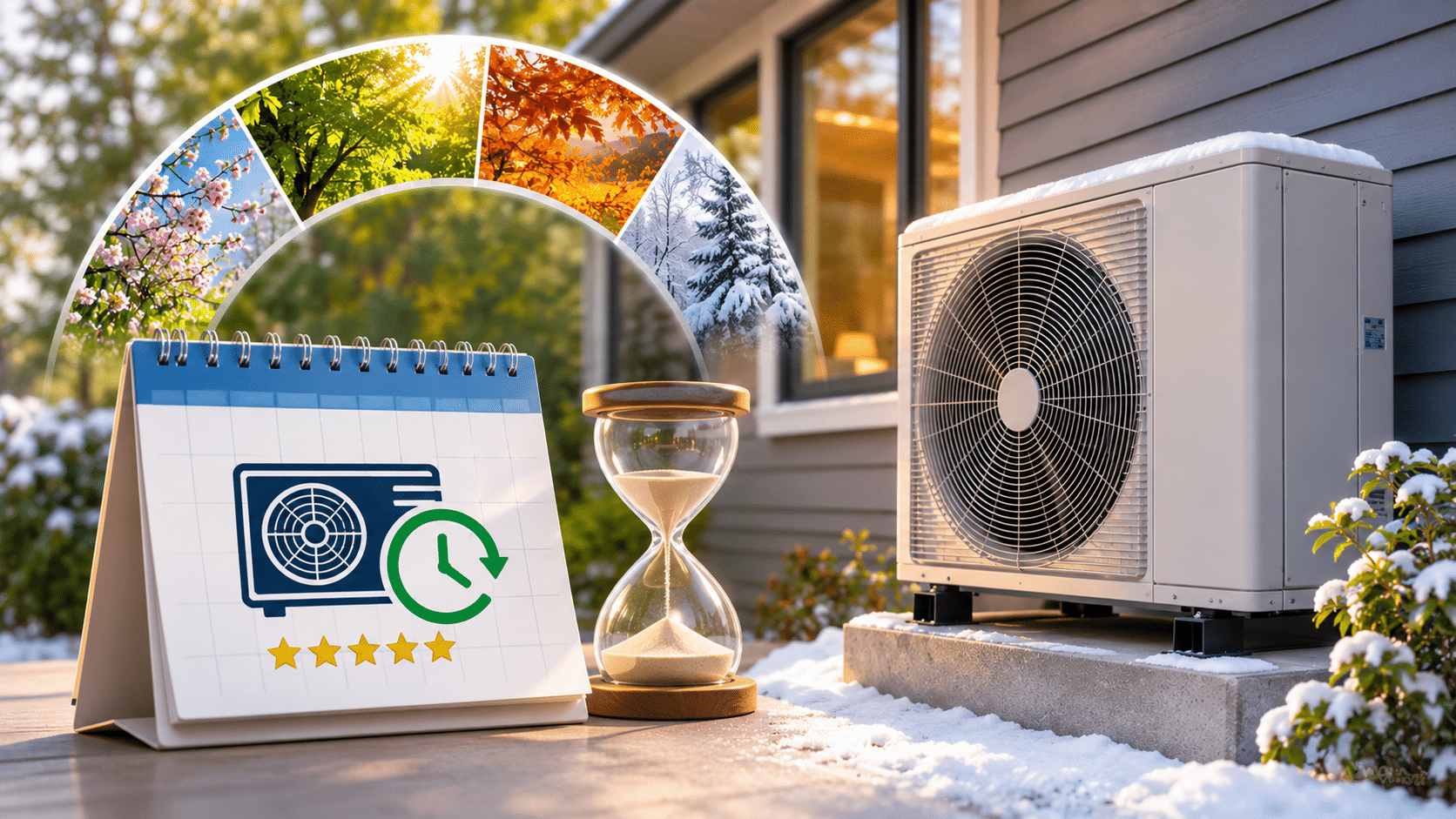
What Is the Average Lifespan of a Heat Pump? A Homeowner’s Guide
Most residential air-source heat pumps last between 15 and 20 years, depending on installation quality, maintenance, usage, and environmental conditions. For homeowners in Victoria, BC, understanding these factors can help protect their heating and cooling investment.
A heat pump is an important part of your home’s comfort system. It keeps your living space warm during colder months and provides cooling when temperatures rise. Like any mechanical equipment, however, it experiences wear and tear over time. Knowing when to maintain, repair, or replace your system can help you avoid unexpected breakdowns and unnecessary expenses.
How Long Does a Heat Pump Typically Last?
When considering a new heating and cooling system, longevity is naturally one of the biggest questions homeowners ask.
According to Natural Resources Canada, air-source heat pumps generally have a service life of 15 to 20 years. Ground-source heat pumps can last approximately 20 to 25 years, while their underground ground loops may last considerably longer.
What Is the Average Lifespan of a Heat Pump? However, these figures are estimates rather than guarantees. Some systems require significant repairs earlier, while well-maintained units may continue operating beyond their expected service life.
The lifespan of your equipment depends on several factors, including:
– The quality and reliability of the heat pump.
– Whether the system was correctly sized for your home.
– The experience of the installation contractor.
– How frequently the equipment operates.
– Regular cleaning and professional servicing.
– Exposure to moisture, dirt, salt air, and other environmental conditions.
A properly installed and maintained system is more likely to provide reliable heating and cooling throughout its expected lifespan.
Factors That Affect Heat Pump Lifespan
Even two heat pumps from the same manufacturer may have different lifespans. The difference often comes down to how they are installed, operated, and maintained.
1. Installation Quality
Installation plays a major role in determining how long your equipment will last.
A heat pump that is incorrectly sized may switch on and off too frequently or struggle to maintain comfortable indoor temperatures. This puts additional pressure on important components, including the compressor and fan motors.
Professional installation ensures that the equipment is suitable for your home’s heating and cooling requirements.
2. Regular Maintenance
Like any heating and cooling equipment, heat pumps need regular attention. Dust accumulation, clogged filters, dirty coils, and blocked outdoor units can reduce airflow and force the system to work harder.
Scheduling annual professional servicing helps identify minor issues before they turn into expensive repairs.
3. Climate and Weather Conditions
Weather conditions can influence equipment performance and durability.
Victoria, BC, has a relatively mild coastal climate compared with many other parts of Canada. However, moisture, salt in coastal air, dirt, and vegetation can affect outdoor components over time.
Keeping the outdoor unit clean and ensuring proper drainage can help reduce unnecessary wear.
4. Frequency of Usage
Heat pumps provide both heating and cooling, which means many homeowners use them throughout the year.
Continuous operation is not necessarily harmful because these systems are designed for regular use. However, incorrect thermostat settings, restricted airflow, and repeated short cycling can contribute to premature component wear.
5. Equipment Quality
Choosing a reliable manufacturer and a suitable model can make a difference in long-term performance.
Look for equipment with appropriate efficiency ratings, dependable warranty coverage, and specifications that suit your home’s requirements. A lower initial purchase price does not always translate into lower long-term ownership costs.
What Is the Average Lifespan of a Heat Pump?
How to Extend the Lifespan of Your Heat Pump
If you want your system to last as long as possible, a few simple habits can make a meaningful difference.
Here are practical ways to protect your investment.
Clean or Replace Air Filters Regularly
Dirty filters restrict airflow and make it harder for your heat pump to distribute conditioned air.
Check your filters regularly and clean or replace them according to the manufacturer’s recommendations. Natural Resources Canada recommends cleaning or replacing filters approximately every three months.
Keep the Outdoor Unit Clear
Leaves, branches, dust, grass, and other debris can collect around the outdoor unit.
Make sure there is sufficient clearance around the equipment to allow proper airflow. Remove loose debris carefully and avoid damaging the fins or other components.
Schedule Annual Professional Servicing
Professional servicing is one of the most effective ways to maintain system reliability.
A qualified technician can inspect:
– Refrigerant levels and system operation.
– Electrical connections and controls.
– Indoor and outdoor coils.
– Fan motors and moving components.
– Drainage and condensate lines.
– Thermostat operation and airflow.
Annual servicing can identify developing problems before they lead to unexpected breakdowns.
Use Appropriate Thermostat Settings
Avoid constantly changing your thermostat settings. Maintaining a comfortable, consistent temperature allows your system to operate more steadily.
Use the manufacturer’s recommended settings and operating modes rather than frequently switching between heating and cooling.
Address Small Problems Early
Unusual noises, reduced airflow, water leakage, or inconsistent temperatures should not be ignored.
What Is the Average Lifespan of a Heat Pump? A minor issue can sometimes affect other components if the system continues operating without attention. Getting problems inspected early may help prevent more expensive repairs.
For additional maintenance advice, read our detailed guide: Your Comprehensive Heat Pump Maintenance Guide.
Does Victoria’s Climate Affect Heat Pump Lifespan?
What Is the Average Lifespan of a Heat Pump? Climate is an important consideration when evaluating the durability of heating and cooling equipment.
Victoria experiences relatively moderate winters compared with colder Canadian regions. This can be favourable for heat pump operation because equipment does not always have to deal with prolonged periods of extreme cold.
However, coastal conditions bring their own challenges.
Moisture, salt exposure, and accumulated debris can gradually affect outdoor components. Outdoor coils may also collect dirt and vegetation, restricting airflow and reducing heat transfer.
Homeowners should pay particular attention to:
– Keeping outdoor units free from leaves and vegetation.
– Checking for unusual corrosion or visible damage.
– Ensuring water drains properly around the equipment.
– Maintaining clean indoor filters.
– Booking professional inspections every year.
What Is the Average Lifespan of a Heat Pump? With appropriate installation and maintenance, homeowners in Victoria can give their heat pumps a better chance of reaching their expected service life.
What Are the Warning Signs That Your Heat Pump Is Nearing the End of Its Life?
What Is the Average Lifespan of a Heat Pump? A heat pump does not necessarily stop working suddenly when it gets older. In many cases, it gives homeowners warning signs that its performance is declining.
Recognising these symptoms can help you decide whether a repair or replacement makes more financial sense.
Frequent Repairs
If you are repeatedly calling technicians to fix different components, repair expenses can quickly add up.
An older system that requires frequent attention may be approaching the end of its useful service life.
Higher Energy Bills
A noticeable increase in electricity consumption without a corresponding change in usage could indicate reduced system efficiency.
Dirty coils, refrigerant issues, failing components, or ageing equipment may contribute to the problem.
Inconsistent Heating or Cooling
What Is the Average Lifespan of a Heat Pump?
If some rooms feel comfortable while others remain too warm or too cold, your system may not be operating as effectively as it once did.
This could be caused by airflow problems, component failures, or an ageing heat pump.
Unusual Sounds
Grinding, rattling, buzzing, or persistent clicking noises can indicate mechanical or electrical problems.
While some noises may have simple explanations, unusual sounds should be checked by a qualified technician.
System Is More Than 15 Years Old
What Is the Average Lifespan of a Heat Pump? Age alone does not mean you need a replacement. However, once your heat pump reaches 15 years or more, it is sensible to monitor its performance and repair history more closely.
If major components begin failing, compare the cost of repairs with the benefits of installing a newer, more efficient model.
Should You Repair or Replace an Older Heat Pump?
What Is the Average Lifespan of a Heat Pump? One of the most common questions homeowners face is whether to keep repairing an older system or invest in a replacement.
There is no universal replacement age. The right decision depends on the condition of the equipment, the repair cost, its efficiency, and how reliably it heats and cools your home.
Do Ductless Heat Pumps Last as Long as Traditional Heat Pumps?
Ductless heat pumps, also known as mini-split systems, are popular among homeowners because they provide heating and cooling without requiring traditional ductwork.
They typically consist of an outdoor compressor connected to one or more indoor units.
What Is the Average Lifespan of a Heat Pump? Their lifespan depends on installation quality, operating conditions, equipment quality, and maintenance. A well-maintained ductless system can provide reliable service for many years.
Some important maintenance practices include:
– Cleaning indoor filters regularly.
– Keeping indoor units free from dust.
– Maintaining adequate clearance around outdoor equipment.
– Checking condensate drainage.
– Scheduling annual professional inspections.
For homeowners looking to upgrade their heating and cooling systems, choosing the right equipment and installer is just as important as regular maintenance.
Does Running a Heat Pump All Day Reduce Its Lifespan?
What Is the Average Lifespan of a Heat Pump? Heat pumps are designed to operate for extended periods, particularly during colder weather. Unlike some conventional heating systems, they work by transferring heat rather than generating it directly.
In many situations, maintaining a consistent thermostat setting allows the system to operate efficiently.
However, problems can arise when airflow is restricted, components are damaged, or the equipment is incorrectly sized.
Instead of frequently switching the system on and off, follow the manufacturer’s operating recommendations and arrange servicing whenever you notice unusual performance.
FAQ’s:
What is the average lifespan of a heat pump?
The average lifespan of an air-source heat pump is approximately 15 to 20 years, according to Natural Resources Canada. Actual lifespan depends on equipment quality, installation, climate, and maintenance.
Can a heat pump last 25 years?
What Is the Average Lifespan of a Heat Pump? Yes, some heat pumps can operate for 25 years or longer. However, this is beyond the typical expected service life of most residential air-source systems. Ground-source heat pumps generally have longer equipment lifespans.
How often should a heat pump be serviced?
A heat pump should generally receive professional maintenance once a year. Homeowners should also clean or replace filters regularly and keep indoor and outdoor units free from obstructions.
Is it worth repairing a 15-year-old heat pump?
It depends on the problem and repair cost. Minor repairs may be worthwhile, but expensive compressor or major component replacements should be compared against the cost and efficiency benefits of a new system.
Do ductless heat pumps last longer?
Ductless heat pumps can provide long service lives, but there is no guarantee that they will outlast ducted systems. Installation quality, maintenance, usage, and equipment specifications all influence longevity.
Keywords:
Heat pump lifespan in Canada
How long does a heat pump last?
Average life of a heat pump
Heat pump maintenance tips
Signs your heat pump needs replacement
Ductless heat pump lifespan
Heat pump repair and replacement
Heat pump maintenance in Victoria BC